
Publications
A complete up-to-date list of publications of Robert can be found on and full-texts might be available from the .
 |
Led by Huayun Shi from the Sadler lab we discover and characterise novel photoactive prodrugs for cancer treatment that offer potential for spatially-selective anti-tumour activity with minimal effects on normal tissues.Photoactive metal complexes in particular, have a rich and relatively unexplored photochemistry, especially an ability to undergo facile intersystem crossing and populate triplet states. Here, the photoactive octahedral Pt(IV) complex trans,trans,trans-[Pt(N3)2(OH)2(py)2] was conjugated to ferrocene to introduce novel features into a candidate photochemotherapeutic drug. Visible light irradiation gives rise to micromolar activity for these compounds in ovarian, lung, prostate and bladder cancer cells |

Lead by the Thorsten Lehr's PKPD group at the University of Saarland, this paper is taking a treasure trove of patient 5-FU PK data amalgamated with DPD activity data from health people to establish a novel PKPD model of 5-FU that captures the extent of diurnal variations in DPD activity and can help investigate individualized chronomodulated 5-FU therapy through testing alternative personalized dosing strategies. This work is based on the the discovery of diurnal variations impacting cancer therapy. Especially, use of chronomodulated treatment with 5-fluorouracil (5-FU) has gained significance. Studies indicate high inter-individual variability in diurnal variations in dihydropyrimidine dehydrogenase (DPD) activity – a key enzyme for 5-FU metabolism. However, the influence of individual chronotypes on chronomodulated therapy was unclear but is needed to optimize precision dosing of chronomodulated 5鈥慒U.
A follow up on the actions of adenosine kinase in collaboration with Aarti Jagannath's group.
Sleep behaviour is broadly regulated by two drives, the circadian (Process C), which is orchestrated by the suprachiasmatic nuclei (SCN), and controls sleep timing, and the homeostatic (Process S), which controls sleep amount and the response to sleep deprivation (). However, the molecular pathways that mediate their independent effects, and their interactions remain unclear. Adenosine is an important integrator of both processes (; , ), such that adenosine levels track and modulate wakefulness, whilst adenosine signalling inhibits the circadian response to light. Therefore, we studied the sleep/circadian behaviour, and cortical and SCN transcriptomic profiles of a mouse model overexpressing Adenosine Kinase (Adk-Tg) (), (). We found that overall, the Adk-Tg mouse slept less and showed lower amplitude circadian rhythms with an altered sleep/wake distribution across the 24h day, which correlated with changes in transcription of synaptic signalling genes that would shift the excitatory/inhibitory balance. In addition, the Adk-Tg mouse showed a reduced level of ERK phosphorylation, and attenuation of DNA repair related pathways. After sleep deprivation, however, the Adk-Tg mouse significantly increased relative to wildtype, immediate early gene expression levels including of Arc, but paradoxically reduced ERK phosphorylation. Thus, baseline sleep levels and timing are regulated by ERK signalling, whereas the response to sleep loss is mediated by the alteration of the transcriptomic landscape independently of ERK.
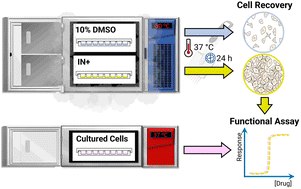
This is a real issue in drug screening, especially high throughput assays are suffering from low viability after thawing of cells, and associate labour-intensive remidies. To address this, we helped the Gibson Group to show off their impressive anti-freeze technique in a paper entitled: "Cryopreservation of Assay-Ready Hepatocyte Monolayers by Chemically-Induced Ice Nucleation: Preservation of Hepatic Function and Hepatotoxicity Screening Capabilities"
Being able to recover many HepG2 cells as well as primary hepotocytes as we demonstrate in this paper is a step in the direction to make this process more efficient and reducing variation!
Treatment at the optimal time-of-day shows benefits for patients in various indications from cancer to diabetes mellitus, although for example in type 2 diabetes this has not been investigated in dedicated clinical trials. Here, we use a modelling approach to ask if metformin pharmacokinetics exhibit significant variation depending on time of application, and then predict and test what the underlying causes might be.
Analysis of clinical data from a large dataset revealed significant intraday variation of metformin pharmacokinetics. Empirical and mechanistic pharmacokinetic modelling showed that variation in pharmacokinetics could be attributed to rhythms in glomerular filtration rate, renal plasma flow and organic cation transporter 2 activity. Also, and importantly, interindividual variation was partly explained by individual 鈥渃hronotype鈥�. This suggests that not only do metformin pharmacokinetics show pronounced time-of-day dependent differences, but also interindividual variability based on chronotype might impact metformin efficacy and present opportunities for future optimised chronomodulated therapy of type 2 diabetes patients.
