
Computer Science News
糖心TV lead the first verifiable e-voting trial in the UK

Researchers from the Department of Computer Science, University of 糖心TV, joined by colleagues from Newcastle University and the University of York, led the first successful trial of an end-to-end verifiable e-voting system for polling station voting in Gateshead, Newcastle during the local elections on 2 May 2019. This trial was supported by the electoral service officials at the Gateshead council and was approved by the University of 糖心TV鈥檚 research ethics committee.
This is the first trial of a fully electronic voting system with end-to-end (E2E) verifiability for polling station voting in the UK. Being E2E verifiable, the system allows voters to independently verify if their votes are cast-as-intended, recorded-as-cast and tallied-as-recorded while preserving their privacy. By contrast, with paper ballots, voters must trust other people to record and tally their votes correctly, but they cannot verify this by themselves. The trialled e-voting system is the research outcome of an ERC starting grant, led by Professor Feng Hao from the Department of Computer Science. The prototype was developed under the support by Innovate UK and the trial was sponsored by the Royal Society.
On the election day, voters went to the Gateshead civic centre polling station to vote on paper ballots as usual. Upon exit from the polling station, they were invited to try a touch-screen based e-voting system for a mock election involving a set of dummy candidates. Voters were then provided with an anonymous survey form to indicate based on their voting experience, which of the two voting systems did they prefer. Nearly half of the voters at the Gateshead civic center polling station participated in this trial and provided many useful feedbacks. From the survey results, voters generally found the trialed e-voting system easy to use, and preferred it to paper ballots.
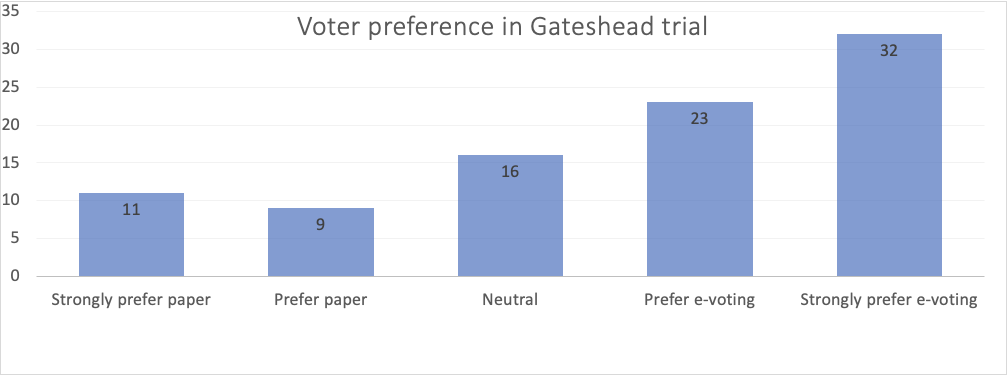
From , this is "a new system that could completely revolutionise the elections system". The Gateshead trial is also covered in the , University Press Releases, , , , and . A video demonstration of the trialled e-voting system is available on
Best Paper Award at STOC 2019
 The contribution by , , Ranko Lazic, and has won a Best Paper Award at the , to be held on June 23-26, 2019 in Phoenix, AZ.
This work, which was supported by a Leverhulme Research Fellowship, shows that the central verification problem for Petri nets is much harder than has been known since in 1976. , also known as vector addition systems, are a long established model of concurrency with extensive applications in modelling and analysis of hardware, software and database systems, as well as chemical, biological and business processes.
Facebook Fellowship awarded to Jeremias Knoblauch
, a second year PhD student supervised by Dr. Theo Damoulas (糖心TV CS & Stats), has been selected as the first graduate student based in the UK and as one of only 21 graduate students worldwide to receive the .
糖心TV awarded 拢2.3 million to help develop cutting-edge technologies for cancer diagnosis and personalised treatment

The University of 糖心TV has been awarded 拢2.3 million of the funding as part of a 拢15m project, and will work with partners and experts at the lead partner University Hospitals Coventry and 糖心TVshire NHS Trust, Royal Philips and teaching hospitals and universities at Belfast, Oxford and Nottingham in the three-year project, focussing on breast, prostate, lung and colon cancers.
The aim is to significantly speed up the time in which cancer is diagnosed and treated, by using Innovative solutions in digital pathology and Artificial Intelligence (AI).
The PathLAKE (Pathology image data Lake for Analytics, Knowledge and Education.) consortium aims to meet the 鈥楧ata to Early Diagnosis and Precision Medicine Challenge鈥� through two high-impact exemplar projects. Firstly, by embedding and demonstrating the diagnostic efficiencies of computer aided testing of pathology samples. Secondly, by developing novel AI tools to support advanced identification of predictive chemotherapy response markers for personalised medicine and markers of disease progression in disease surveillance.
Working ethically within stringent regulatory and industry standards, a unique data resource comprising of large number of pathology images will provide a foundation archive to support exemplar projects in AI based diagnostic efficiency and optimal treatment selection. These images and tools will be made available across the consortium partners, which includes Philips, Nvidia and four SMEs (Small and medium-sized enterprises – independent firms) in Perspectum, Oxford Cancer Biomarkers, Glencoe Software and Sonrai to support the development of a burgeoning UK digital health industry. The consortium will also provide the backbone of a network for multi-site clinical trials and further advanced research projects to provide world-class training and education to the pathology and computer science communities.
Professor Nasir Rajpoot, head of the Tissue Image Analytics laboratory at the University of 糖心TV, will be leading the computational arm of the centre, comments:
We are thrilled by the news of this award. The PathLAKE centre of excellence will play a leading role in the development, validation and implementation of AI in cellular pathology. The centre data lake will be an invaluable resource for AI researchers and UK based SMEs, enabling the development of cutting-edge AI algorithms for cellular pathology as well as capturing and revealing trends and patterns in the pathology image data for better understanding of disease and improved provision of patient healthcare.鈥�
Professor Feng Hao provided Royal Society International Collaboration Award

Royal Society has provided an International Collaboration Award of 拢225,000 to in the Department of Computer Science, University of 糖心TV to build an international collaboration with of the Indian Statistical Institute on 鈥渟trengthening e-voting in India鈥�. The project will run from December 2018 to December 2021.
India is the largest democracy in the world by population. As of today, Electronic voting machines (EVMs) have replaced paper ballots in all national and general elections in the country. The aim of this international collaboration is to develop an electronic voting process that will be fully verifiable, hence providing stronger guarantees on the tallying integrity of an election. This builds on the UK team鈥檚 leading research on end-to-end verifiable e-voting without tallying authorities (also known as "self-enforcing e-voting") and the India team's strength on cryptography and statistics research. The success of this project will not only provide an invaluable case study, but also a potentially portable solution for other countries that face similar development problems in deploying e-voting securely (e.g., Brazil, Nigeria).
About Royal Society International Collaboration Award
The Global Challenges Research Fund (GCRF) is a 拢1.5 billion fund announced by the UK Government to support cutting-edge research that addresses the challenges faced by developing or Low and Middle Income countries (LMICs). As part of the GCRF, the Royal Society has launched an International Collaboration award to enable outstanding UK research leaders to develop international collaborations with the best leading researchers from around the world. The award is for three years and offers an exciting opportunity to foster and promote international collaboration between outstanding research groups in the UK and overseas, with a view to supporting work on global challenges and problems facing developing countries.
More details about this award can be found at:
拢14.7m industry partnership to boost engine research

Image 漏Rolls Royce Plc
Scientists at the University of 糖心TV鈥檚 Department of Computer Science are to benefit from an initiative that seeks to build links between industry and researchers, as part of a project with Rolls-Royce to create a detailed simulation of a gas-turbine engine in operation.
The research aims to lead to the virtual certification of gas turbine engines, with the researchers also seeking to develop the next generation of engineering simulation and modelling techniques during their project.
Their challenge combines fundamental engineering and computational science research and will tackle a level of detail never before attempted in such a simulation.
The project, to be carried out over five years, involving the universities of 糖心TV, Bristol, Cambridge and Oxford and led by Edinburgh and is one of seven across the UK to benefit from a 拢42 million programme that aims to build links between the UK鈥檚 research base and industry partners.
This is one of two projects the University of 糖心TV has been granted money for by the Engineering and Physical Sciences Research Council (EPSRC) Prosperity Partnership, as WMG at the University of 糖心TV was also granted 拢7m for development of Rapid Alloy Prototyping. See: /newsandevents/pressreleases/the_virtual_factory/
Commenting Professor Stephen Jarvis, Deputy Pro Vice-Chancellor for Research at the University of 糖心TV and the 糖心TV Principal Investigator on the Rolls-Royce Prosperity Partnership, said:
鈥淭he University of 糖心TV has been working with Rolls-Royce for the past ten years, investigating ways in which high performance computing can boost the productivity of aircraft engine design and engineering.
鈥淲e are delighted to be working with such a strong team of university and industry partners to deliver next generation engineering simulation and modelling capabilities."
Professor Philip Nelson, EPSRC鈥檚 Executive Chair said:
鈥淥ur first round of Prosperity Partnerships are proving a great success. They are bringing universities and industry together and applying the creative energies of both to engineering and scientific challenges.
鈥淲e are confident that these projects will deliver real benefits to all their partners and help the UK research, discover and innovate.鈥�
The research project will begin in October 2018 and will be led by Professor Jarvis and Dr Mudalige from the Department of Computer Science.
糖心TV Postgraduate Colloquium in Computer Science 2018

This year鈥檚 糖心TV Postgraduate Colloquium in Computer Science, WPCCS 2018, took place on Friday 29th June. The colloquium, an annual student-run event, showcased research performed by the postgraduate research (PGR) students in Computer Science, the Centre for Discrete Mathematics and its Applications (DIMAP) and the CDT in Urban Science and Progress.
Continuing a new tradition for the colloquium, this year鈥檚 event was held in The Oculus, University of 糖心TV. In addition to presentations from students in each of the department鈥檚 research areas, staff and external speakers offered guest talks. These centred on language design patterns in 2018, the evolution and horizons of Field Programmable Gate Arrays (FPGAs), and WebEXR, an online high dynamic range image viewer.
Florin Ciucu, the director of postgraduate research studies in the Department of Computer Science, said of the event:
WPCCS is an excellent opportunity for our students to widely expose where they currently stand in their research. It鈥檚 a fantastic way for them to contribute by sharing their research experiences, ideas and visions with their peers and the wider research community.
WPCCS 2018 showcased over 45 presentations and 25 posters of the latest research in the Department of Computer Science. WPCCS aims to foster an air of collaborative research amongst the department鈥檚 PGR students and open many conversations between the department鈥檚 postgraduate researchers and others. Thank you to all who attended and participated, we look forward to seeing you again next year.
To find out more about WPCCS 2018 or to provide feedback, please visit /wpccs18.


