
Computer Science Colloquium
The Computer Science Colloquium features external speakers from all areas of computer science. If you have any questions, please contact the organisers, Markus Brill and Yu Guan.
For visiting the department, see the map of campus, directions, and accommodation recommendations.

Upcoming Events
No events to show.
Past Events
CS Colloquium: Complexity in the Era of AI and Data-Driven Computing (Lance Fortnow - Illinois Institute of Technology)
Complexity in the Era of AI and Data-Driven Computing
Lance Fortnow
Illinois Institute of Technology
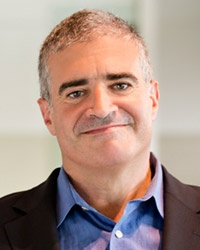
BiographyLance Fortnow is a professor in Computer Science at the Illinois Institute of Technology. He founded the College of Computing at Illinois Tech and served as its inaugural dean from June 2020 to June 2025, after starting as the Dean of Science in 2019. Fortnow received his Ph.D. in Applied Mathematics at MIT in 1989 under the supervision of Michael Sipser. Before he joined Illinois Tech, Fortnow was the chair of the School of Computer Science at the Georgia Institute of Technology and previously was a professor at Northwestern University and the University of Chicago, a senior research scientist at the NEC Research Institute and a one-year visitor at CWI and the University of Amsterdam. From 2007 to 2018 Fortnow held an adjoint professorship at the Toyota Technological Institute at Chicago. Fortnow's research spans computational complexity and its applications. His work on interactive proof systems and time-space lower bounds for satisfiability have led to his election as a 2007 ACM Fellow. In addition he was an NSF Presidential Faculty Fellow from 1992-1998 and a Fulbright Scholar to the Netherlands in 1996-97. His current research focuses on how artificial intelligence changes the way we think about both the theory and applications of computing. Among his many activities, Fortnow served as the founding editor-in-chief of the , served as chair of and on the board of directors. He served as chair of the from 2000-2006. Fortnow originated and co-authors the since 2002, the first major theoretical computer science blog. He has over six thousand social media followers. Fortnow's survey is one of the CACM's most downloaded article. Fortnow has written a popular science book loosely based on that article. |
CS Colloquium + Foundations of AI Seminar: Arthur Gretton (UCL)
Title: Causal Effect Estimation with Context and Confounders
Abstract: A fundamental causal modelling task is to predict the effect of an intervention (or treatment) on an outcome, given context/covariates. Examples include predicting the effect of a medical treatment on patient health given patient symptoms and demographic information, or predicting the effect of ticket pricing on airline sales given seasonal fluctuations in demand. The problem becomes especially challenging when the treatment and context are complex (for instance, "treatment" might be a web ad design or a radiotherapy plan), and when only observational data is available (i.e., we have access to historical data, but cannot intervene ourselves). The challenge is greater still when the covariates are not observed, and constitute a hidden source of confounding.
I will give an overview of some practical tools and methods for estimating causal effects of complex, high dimensional treatments from observational data. The approach is based on conditional feature means, which represent conditional expectations of relevant model features. These features can be deep neural nets (adaptive, finite dimensional, learned from data), or kernel features (fixed, infinite dimensional, enforcing smoothness). When hidden confounding is present, a neural net implementation of instrumental variable regression can be used to correct for this confounding. The methods will be applied to modelling employment outcomes for the US Job Corps program for Disadvantaged Youth, and in policy evaluation for reinforcement learning.
Bio: Arthur Gretton is a Professor with the Gatsby Computational Neuroscience Unit, and director of the Centre for Computational Statistics and Machine Learning (CSML) at UCL; and a research scientist at Google Deepmind. His recent research interests include causal inference and representation learning, design and training of generative models, and nonparametric hypothesis testing.
Arthur has been an associate editor at IEEE Transactions on Pattern Analysis and Machine Intelligence, an Action Editor for JMLR, a Senior Area Chair for NeurIPS (2018,2021) and ICML (2022), a member of the COLT Program Committee in 2013, and a member of Royal Statistical Society Research Section Committee since January 2020. Arthur was program co-chair for AISTATS in 2016, tutorials co-chair for ICML 2018, workshops co-chair for ICML 2019, program co-chair for the Dali workshop in 2019, and co-organsier of the Machine Learning Summer School 2019 in London.
See also
CS Colloquium: Francis Bach (INRIA)
Physics-informed machine learning as a kernel method
CS Colloquium: Valentina Donzella (WMG, 糖心TV)
What Automated Vehicles need to learn? The dark side of sensor data
CS Colloquium: Prof. Huiyu Zhou (Leicester)
Low-light image enhancement using cell vibration model
CS Colloquium: Juan Ye (St Andrews)
Title: Continual learning in sensor-based human activity recognition
CS Colloquium: Budi Arief (Kent)
Ransomware and Us: A Socio-technical Look into Ransomware
CS Colloquium: Cecilia Pasquini (Fondazione Bruno Kessler)
Video-based identity proofing
CS Colloquium: Prof. Chenggang Wu, (Chinese Academy of Sciences)
Enhancing software security through compartmentalization and isolation
CS Colloquium: Matthias Caro (FU Berlin)
Learning quantum states and unitaries of bounded gate complexity
CS Colloquium: Zoltan Szab贸 (LSE)
Generalized Mean and Variance for Sample-Efficient Data Science
CS Colloquium: Wenda Li (Heriot Watt University)
Practice of RF Sensing for Digital Health
CS Colloquium: Haixing Duan (Tsinghua University)
Cyber-Cannon: Collaborating Cloud Service for Distributed Denial of Service(DDoS) Attacks
CS Colloquium: Vitomir Struc (University of Ljubljana)
Face Image Quality Assessment (FIQA): Recent Advancements and Future Challenges
CS Colloquium: Sebastian Wild (Liverpool)
Quicksort, Timsort, Powersort: Algorithmic ideas, engineering tricks, and trivia behind CPython鈥檚 new sorting algorithm
CS Colloquium: Evangelos Pournaras (Leeds)
A `Swiss Army Knife' for Direct Democracy - On Voting Design and AI support for Legitimacy
CS Colloquium: Pengpeng Hu (Coventry University)
Deep learning-based 3D human body shape reconstruction from point clouds
CS Colloquium: Debankur Mukherjee (Georgia Tech)
Load Balancing under Data Locality: Extending Mean-Field Framework to Constrained Large-Scale Systems
CS Colloquium: Lirong Xia (Rensselaer Polytechnic Institute)
AI-Powered Group Decision Making
CS Colloquium: Irene Amerini (Sapienza Universit脿 di Roma)
Advances in Multimedia forensics to counter misinformation
CS Colloquium: Yuan-Fang Li (Monash)
Turning information into knowledge: challenges & solutions
CS Colloquium: Yali Du (King's College London)
Reinforcement Learning with Human Values
CS Colloquium: Sergii Strelchuk (Cambridge)
Insights in quantum complexity from classical simulation of quantum computation
CS Colloquium: Petar Velickovic (Deepmind)
Reasoning Algorithmically: from Toy Experiments to AGI Modules
CS Colloquium: Debmalya Mandal (Max Planck Institute)
AI for Societal Decision-Making
CS Colloquium: Jose Camacho-Collados (Cardiff)
Natural Language Processing and Social Media: Challenges, Applications and TweetNLP
CS Colloquium: Matthias Caro (Caltech)
Quantum Computing Meets Machine Learning - A Math/TCS Perspective
CS Colloquium: Grzegorz Lisowski (糖心TV) - Viva Special
An Algorithmic Analysis of Deliberation and Representation in Collective Behaviour
DIMAP Seminar + DCS Colloquium: Adi Shamir (Weizmann Institute of Science)
is the Paul and Marlene Borman Professor of Applied Mathematics at the . He is a co-inventor of the RSA algorithm (along with Ron Rivest and Len Adleman), a co-inventor of the Feige鈥揊iat鈥揝hamir identification scheme (along with Uriel Feige and Amos Fiat), one of the inventors of differential cryptanalysis and has made numerous contributions to the fields of cryptography and computer science.
Adi is receiving an honorary degree in the January congregation, managed by WMG.