
Linear Dichroism
Why do we use linear dichroism?
Linear Dichroism (LD) is a spectroscopic technique that can be used with systems that are either intrinsically oriented, or can be oriented during an experiment by external forces. It gives information about conformation and orientation of structures within molecules.
Knowing the structure of a molecule is one of the keys to deducing its function in a biological system. Many biomacromolecules, however, are not amenable to structural characterisation by powerful techniques such as NMR and X-ray diffraction because they are too large, too flexible or cannot be crystallized. Long molecules such as
DNA, DNA-ligand complexes, DNA-enzyme complexes
Fibrous proteins including cytoskeletal proteins, Alzheimers and prion proteins, collagen
Membrane proteins and peptides in liposomes (which are distorted by the flow so acquiring a high enough aspect ratio to orient)
Carbon nanotube, carbon nanotube-ligand complexes
LD is also ideal for following the kinetics of any reaction which involves changing the structure or length of a molecule. A simple example is that of restriction enzyme activity on DNA.
What is linear dichroism?
To measure LD the sample is oriented, then the difference in absorption of light linearly polarised parallel and perpendicular to the orientation axis is measured
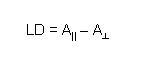
In the case of flow orientation of long molecules the orientation axis is the long axis of the molecule. The figure below shows a schematic of how LD is measured.

We have designed the Couette flow LD cells we use in our research. The refinements of our original designs are now made by Diotica Scientific Ltd. and sold by Kromatek ().
Representative publications
Rodger, A.; Nord茅n, B. 鈥淐ircular dichroism and linear dichroism鈥�; Oxford University Press, 1997, pp150 (unfortunately this is out of print, but we are working on a new edition)
Bulheller, B.; Rodger, A.; Hirst, J.D. 鈥淐ircular and linear dichroism of proteins鈥� Physical Chemistry Chemical Physics, 2007, 9, 2020-2035
Small, E.; Marrington, R.; Rodger, A.; Scott, D.J.; Sloan. K.; Roper, D.; Dafforn, T.R.; Addinall, S.G. 鈥淔tsZ polymer-bundling by the Escherichia coli ZapA orthologue, YgfE involves a conformational change in bound GTP鈥� Journal of Molecular Biology, 2007, 369, 211-221
Rodger, A.; Marrington, R.; Geeves, M.A.; Hicks, M.; de Alwis, L.; Halsall, D.J.; Dafforn, T.R. 鈥淟ooking at long molecules in solution: what happens when they are subjected to Couette flow?鈥� Physical Chemistry Chemical Physics, 2006, 8, 3161-3171
Hicks, M.R.; Rodger, A.; Thomas, C.M.; Batt, S.M.; Dafforn, T.R. 鈥淩estriction enzyme kinetics monitored by UV linear dichroism鈥� Biochemistry 2006, 45, 8912-8917
Marrington, R.; Seymour, M.; Rodger, A. 鈥淎 new method for fibrous protein analysis illustrated by application to tubulin microtubule polymerisation and depolymerisation鈥� Chirality 2006, 18, 680-690
Rajendra, J.; Damianoglou, A.; Hicks, M.; Booth, P.; Rodger, P.M.; Rodger, A. 鈥淨uantitation of protein orientation in flow-oriented unilamellar liposomes by linear dichroism鈥�, Chemical Physics 2006, 326, 210鈥�220
Marrington, R.; Dafforn, T.R.; Halsall, D.J.; Hicks, M.; Rodger, A. 鈥淰alidation of new microvolume Couette flow linear dichroism cells鈥� Analyst, 2005, 130, 1608-1616
Rajendra, J.; Rodger, A. 鈥淭he binding of single stranded DNA and PNA to single walled carbon nanotubes probed by flow linear dichroism鈥� Chemistry - A European Journal 2005, 11, 4841-48
Halsall, D.J.; Dafforn, T.R; Marrington, R.; Halligan, E.; and Rodger, A. 鈥淟inear Dichroism for quantitative Polymerase Chain Reaction applications: An intrinsic signal from DNA has the potential to be an interference-free, specific and label free probe for real-time and quantitative PCR鈥� IVD Technology, 2004, 6, 51-60
Dafforn, T.R. and Rodger, A. 鈥淯nravelling the configuration of protein fibres and membrane proteins鈥� Current Opinion in Structural Biology, 2004, 14, 541-546
Marrington, R.; Small, E.; Rodger, A.; Dafforn, T.R.; Addinall, S. 鈥淔tsZ fibre bundling is triggered by a calcium-induced conformational change in bound GTP鈥� Journal of Biological Chemistry 2004, 47, 48821-48829
Marrington, R.; Dafforn, T. R.; Halsall, D.J.; Rodger, A. 鈥淢icro volume Couette flow sample orientation for absorbance and fluorescence linear dichroism鈥� Biophysical Journal, 2004, 87, 2002-2012
Rajendra, J.; Baxendale, M.; Dit Rap, L.G.; Rodger, A. 鈥淔low linear dichroism to probe binding of aromatic molecules and DNA to single walled carbon nanotubes鈥� Journal of the American Chemical Society, 2004, 126, 11182-11188

A Couette flow cell used for LD.
The light beam comes from the left and is collected by a photomultiplier tube on the right, having passed through the sample.
Below is a sample holder and rod.
